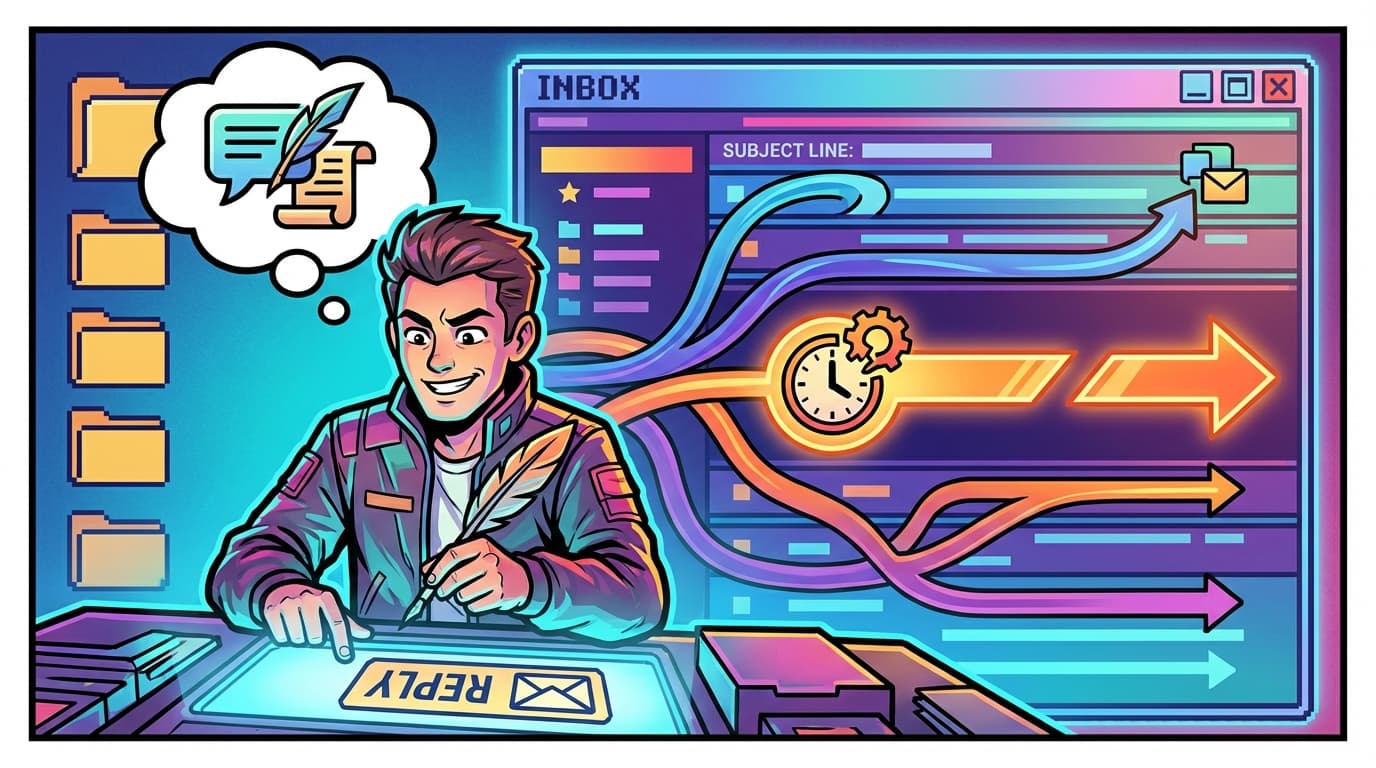
You open your inbox on a Monday morning and spot a thread from seven weeks ago. A vendor contract discussion that went silent after you requested revised terms. A hiring candidate you forgot to reject. An invoice dispute with a customer who stopped responding mid-negotiation.
The thread is still there. The problem it represents never got resolved. Now you need to reply, but hitting "Reply" feels like stepping into a minefield. What changed since then? Did someone else already handle it? Are the numbers still accurate? Will the other party even remember what this was about?
This is the operational reality of email debt. Old threads do not disappear. They sit in your inbox, accumulating risk. And when the moment comes to finally address them, most people make one of two mistakes: they either restart the entire conversation from scratch (wasting everyone's time), or they reply as if no time has passed (creating confusion and exposing stale commitments).
There is a better approach. You can close history without reviving chaos.
Old threads need closure, not revival.
Why Old Threads Are Risky
Replying to an old email thread is not the same as replying to a fresh one. Time changes everything. The longer a thread has been dormant, the more likely these risks apply:
Stale Commitments
You promised a 15% discount in October. It is now February. Does that commitment still stand? Did pricing change? Did the prospect's budget cycle reset? Replying without verifying means you might accidentally honor terms that no longer make sense for your business.
Changed Stakeholders
The person you were negotiating with might have left the company. Their replacement has no context. Your reply lands in a stranger's inbox, referencing meetings they never attended and agreements they never made.
Outdated Numbers and Dates
Invoices reference Q3 figures. Contracts mention a "January 15th deadline" that passed six weeks ago. Proposals include pricing that has since been updated. If you reply without checking every number and date, you are sending a document full of traps.
Missing Attachments
The original thread referenced "the attached PDF" but you cannot find it. Or you find it, but it is version 2 and they are now on version 4. Attachments drift out of sync with threads faster than anything else.
Tone Drift
You were frustrated when you last replied. The other party was defensive. Now you need to re-enter the conversation without carrying that baggage forward. But reading the old thread might pull you back into the emotional state you were in seven weeks ago.
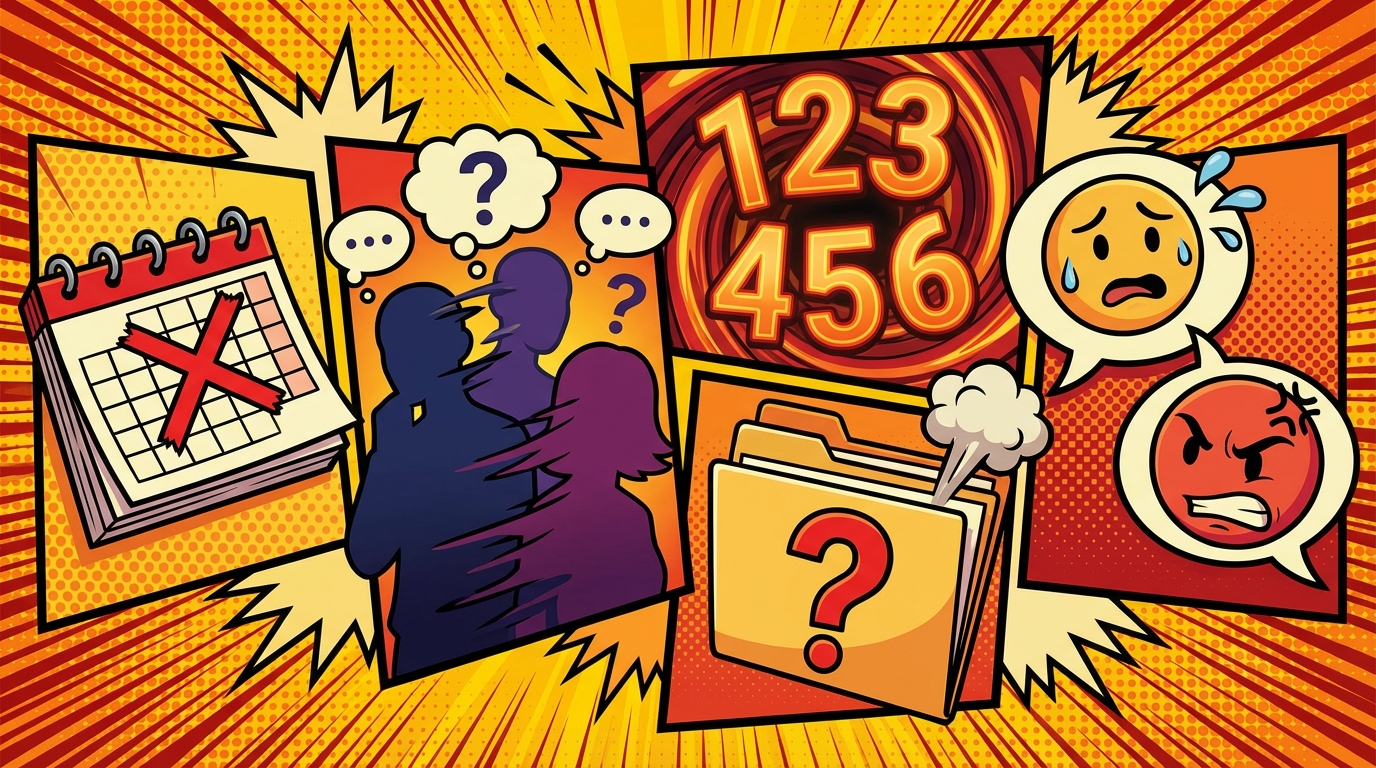
Five risks hiding in every dormant thread.
Should You Reply or Close It
Not every old thread deserves a reply. Some should simply be closed. Before you start drafting, run through this checklist:
Reply if:
- There is a clear next action that only you can take
- Money is involved (invoices, contracts, refunds)
- A person is waiting on you (candidate, customer, partner)
- The thread contains commitments you made that need to be honored or formally retracted
- Reopening will save more time than starting fresh
Close without replying if:
- The issue resolved itself (they bought from someone else, the deadline passed, the project was cancelled)
- Someone else on your team already handled it
- The other party explicitly said "no need to reply" or "we'll circle back if needed"
- Replying would only restart a conversation neither party wants
Start a new thread if:
- The original participants have changed significantly
- The topic has evolved beyond the original scope
- The old thread is so long that finding context is harder than starting fresh
- More than six months have passed and the relationship needs a reset
If you decide to reply, commit to closing the loop in that reply. Do not leave the thread open for another round of back-and-forth that might go dormant again.
The Context Rebuild Playbook
Before you write a single word, you need to reconstruct what actually happened in the thread. This is where most people fail. They skim the last two messages, make assumptions, and fire off a reply that misses critical context buried earlier in the chain.
Read the Full Thread
Start from the first message. Read every reply, including quoted text that got nested deeper and deeper. Commitments often hide in those quoted sections. "As I mentioned on the 15th..." references something you need to find.
Check Attachments
Open every attachment in the thread. Verify version numbers. If the thread references "the updated proposal," make sure you are looking at the same document they were looking at. If attachments are missing from your copy of the thread, note that gap before replying.
Cross-Reference Your Calendar
Did you have a call related to this thread? Check your calendar for meetings with the participants during the active period. Meeting notes might contain context that never made it into the email chain.
Look for Parallel Threads
Sometimes conversations fork. You might have a separate thread with the same person about a related topic. Or a colleague might have their own thread with the same external contact. Search for the person's name and the project name to find related conversations.
Note What Changed Since Then
Write down everything that is different now compared to when the thread went silent:
- Your pricing, policies, or availability
- Their team, budget, or timeline
- External factors (market conditions, regulations, seasons)
This list becomes your safety check before sending.
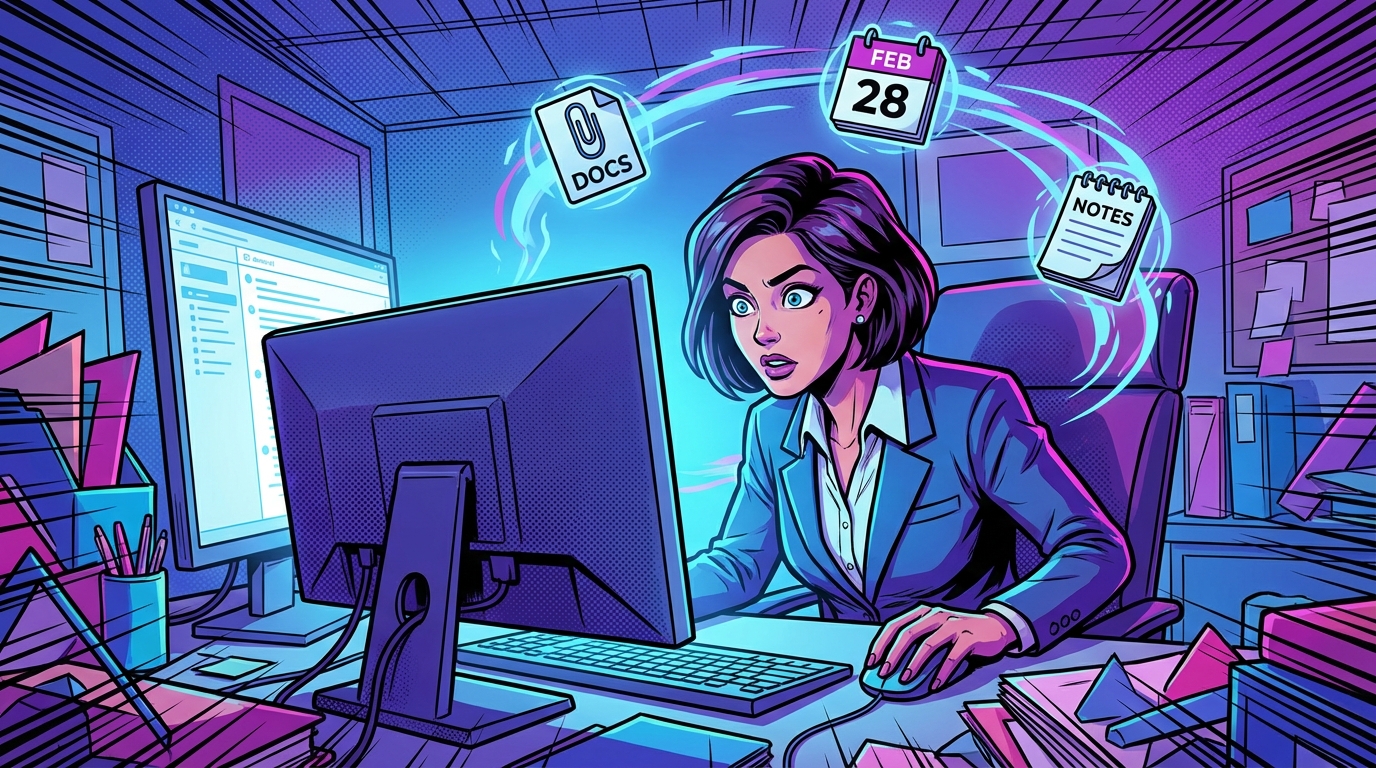
Rebuild context before you reply.
Write the Reply Without Restarting the Thread
The goal is a reply that acknowledges the gap, resets context efficiently, and moves toward closure. You are not apologizing for existing. You are not over-explaining. You are closing a loop.
Here are templates for common situations:
Apology and Status Reset
Subject: [Keep original subject]
Hi [Name],
Apologies for the delayed response on this thread. Here is where things stand on our end:
[One to three bullet points summarizing current status]
Let me know if this is still relevant on your side, or if priorities have shifted.
Best, [Your name]
Quick Check-In Without Guilt
Hi [Name],
Circling back on this. Is this still on your radar, or should we close it out?
[Your name]
Still Relevant Closure Message
Hi [Name],
I wanted to close the loop on this thread. If the project is still active, happy to pick up where we left off. If not, no worries at all.
Let me know either way so I can update my records.
Best, [Your name]
Here Is What Changed Since Then
Hi [Name],
Following up on our earlier conversation. A few things have changed on our end since [month]:
- [Change 1]
- [Change 2]
If you are still interested in moving forward, here is what I would suggest as a next step: [specific action].
[Your name]
Invoice or Payment Follow-Up After a Long Gap
Hi [Name],
I am following up on invoice #[number] from [date]. Our records show it as unpaid.
Could you confirm the status on your end? If there is an issue with the invoice or payment details, happy to sort it out.
Best, [Your name]
Vendor Contract Thread Revival
Hi [Name],
Revisiting our contract discussion from [month]. We are ready to move forward if the terms we discussed are still available.
For reference, the key points were:
- [Term 1]
- [Term 2]
Let me know if anything has changed on your side.
Best, [Your name]
Hiring Candidate Follow-Up After Delay
Hi [Name],
I wanted to follow up on your application for [role]. Apologies for the delay in getting back to you.
[If still considering:] We are still evaluating candidates and would like to schedule a conversation. Are you available [date/time]?
[If closing:] After careful review, we have decided to move forward with other candidates. Thank you for your time, and I wish you the best in your search.
Best, [Your name]
Customer Escalation Re-Entry
Hi [Name],
I wanted to revisit the issue you raised in [month] regarding [brief description]. I understand this was not resolved to your satisfaction at the time.
Here is what we can offer now: [specific resolution or next step].
If you would prefer to discuss this on a call, I am happy to set one up.
Best, [Your name]
Scheduling a Call From an Old Thread
Hi [Name],
I would like to pick this conversation back up. Would a 20-minute call work for you?
I am available [date and time] or [alternative date and time]. Let me know what works, and I will send over a calendar invite.
Best, [Your name]
Short templates for common old-thread scenarios.
Close the Loop With One Question, One Deadline, One Owner
The worst outcome of replying to an old thread is leaving it open for another round of ambiguity. Your reply should close the loop, not restart the cycle.
Every reply to an old thread should include:
One clear question. Not three questions buried in a paragraph. One question that can be answered in one sentence. "Is this still relevant?" or "Can you confirm receipt?" or "Are you available Thursday at 2pm?"
One deadline. If you need a response, say when. "Let me know by Friday" is better than "Let me know when you can." Without a deadline, the thread will go dormant again.
One owner. Make it clear who needs to act. If you are handing off to a colleague, say so. If you need the other party to do something specific, name it. "I will send the updated contract by Wednesday" or "Could you confirm with your finance team and reply by end of week?"
If your reply does not have these three elements, it is not closing the loop. It is just adding noise.
Safety Review Before You Send
Before you hit send on any reply to an old thread, run through this checklist:
Recipients
- Is the original recipient still the right person?
- Should you remove anyone who left the company or changed roles?
- Should you add anyone new who needs visibility?
Dates and Deadlines
- Are all dates in your reply still accurate?
- Did you reference any deadlines that have already passed?
- If scheduling, did you account for timezone differences?
Amounts and Numbers
- Are invoice amounts correct?
- Are pricing figures current?
- Are quantities and percentages accurate?
Commitments
- Are you honoring a commitment you can still fulfill?
- Are you retracting a commitment clearly and professionally?
- Are you making a new commitment you can actually keep?
Attachments
- Are you attaching the right version of the document?
- Does the attachment match what you reference in the body?
- If the original thread had attachments, do you need to re-attach or reference them?
Tone
- Read the reply out loud. Does it sound defensive, apologetic, or aggressive?
- Would you be comfortable if this reply were forwarded to someone else?
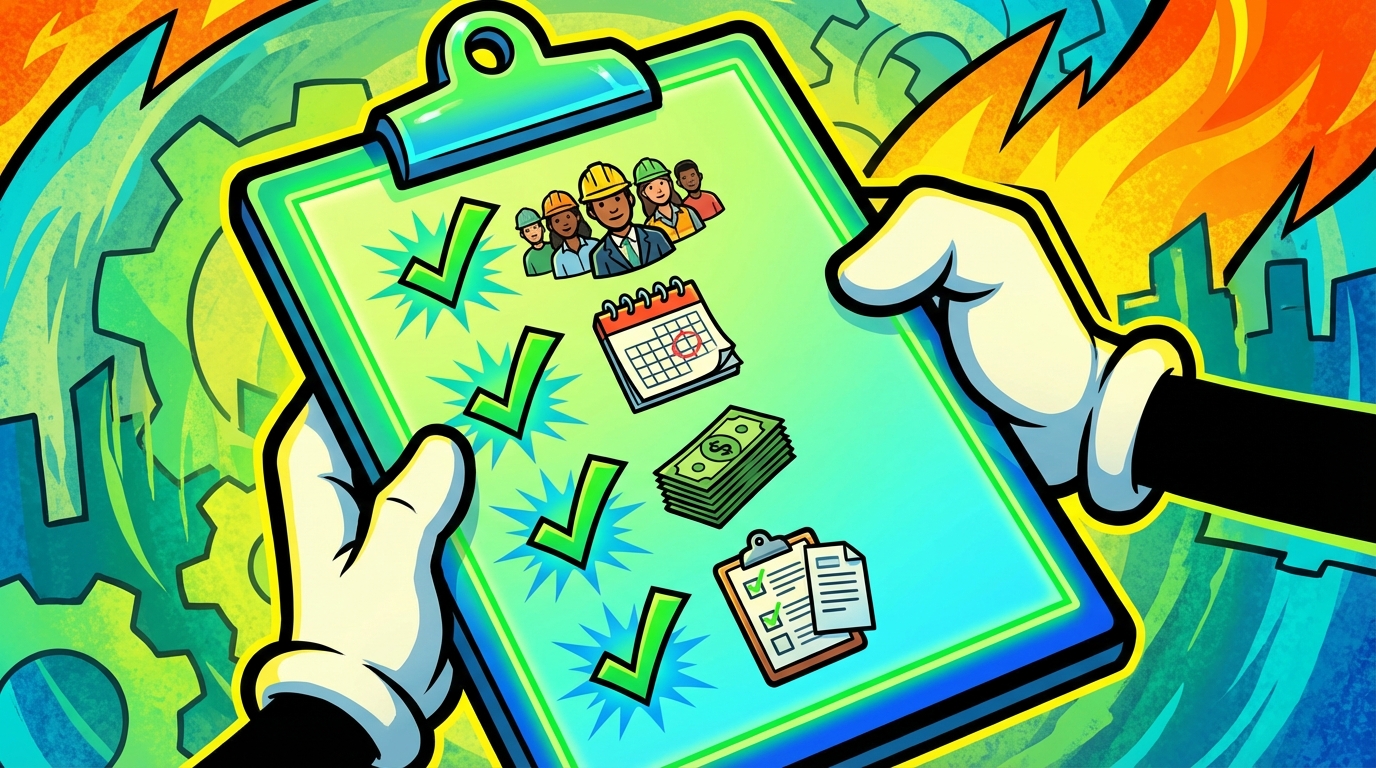
Run the checklist before every send.
A Review-First Workflow for Old Threads
When dealing with old threads, a draft-first workflow reduces risk. Instead of typing directly into the reply box and hitting send, you build a review step into the process.
Here is how this works:
Step 1: Label the thread "Needs Reply" When you identify an old thread that requires action, label it. This signals that a draft should be prepared. The thread gets flagged for attention, and a draft is generated based on the full thread history, including attachments and quoted replies.
Step 2: Review the draft Before anything is sent, you review the draft. Check the recipients, verify the dates, confirm the commitments. This is your safety boundary. Nothing leaves your inbox without your approval.
Step 3: Label "Waiting" after you send Once you send, label the thread "Waiting." If the other party does not respond within a few days, you get a follow-up draft automatically. This prevents the thread from going dormant again.
Step 4: Use rules to enforce safety formatting Natural-language rules can shape how drafts are written. For example, a rule like "always highlight amounts over $1,000 for my review" ensures that high-stakes numbers are flagged before you approve.
Step 5: Send from your preferred environment Approve the draft directly, or sync it to your native Drafts folder in Gmail or Outlook and send from there. Either way, you stay in control.
This workflow keeps old threads from slipping through the cracks while ensuring that every reply gets a human review before it goes out.
Frequently Asked Questions
How long is too long to reply to an email? There is no universal rule, but anything over two weeks feels late. Anything over two months requires an explicit acknowledgment of the delay. If six months have passed, consider whether a new thread makes more sense.
Should I apologize for the delay? A brief acknowledgment is professional. "Apologies for the delayed response" is enough. Do not over-apologize or explain your entire life situation. One sentence, then move on to the substance.
What if the other person already handled it without me? Check before replying. Search for their name, the project, or the company to see if there were parallel threads. If you discover they moved on, a short "closing this loop" message is still courteous.
How do I avoid awkward follow-ups in the future? Use a "Waiting" label and set a follow-up reminder for threads where you are expecting a response. If you do not hear back in three to five days, a draft follow-up gets prepared automatically.
What if the attachment in the old thread is missing? Search your files for the document name or ask the other party to resend. Do not reply referencing an attachment you cannot actually access.
Should I reply-all or just reply to the sender? Default to reply-all if the original thread included multiple stakeholders. If the thread has gone dormant, some recipients may no longer be relevant. Remove people who clearly do not need to be looped in anymore.
How do I close a thread without being rude? A simple "closing this loop" message is not rude. "Wanted to check if this is still relevant. If not, no worries, just closing it out on my end." Most people appreciate the clarity.
Get Started
If you manage an inbox full of old threads that need closing, Jace can help. It works on top of Gmail and Outlook to rebuild context, draft professional replies, and ensure nothing gets sent without your review. Try it for closing loops instead of reviving chaos.